
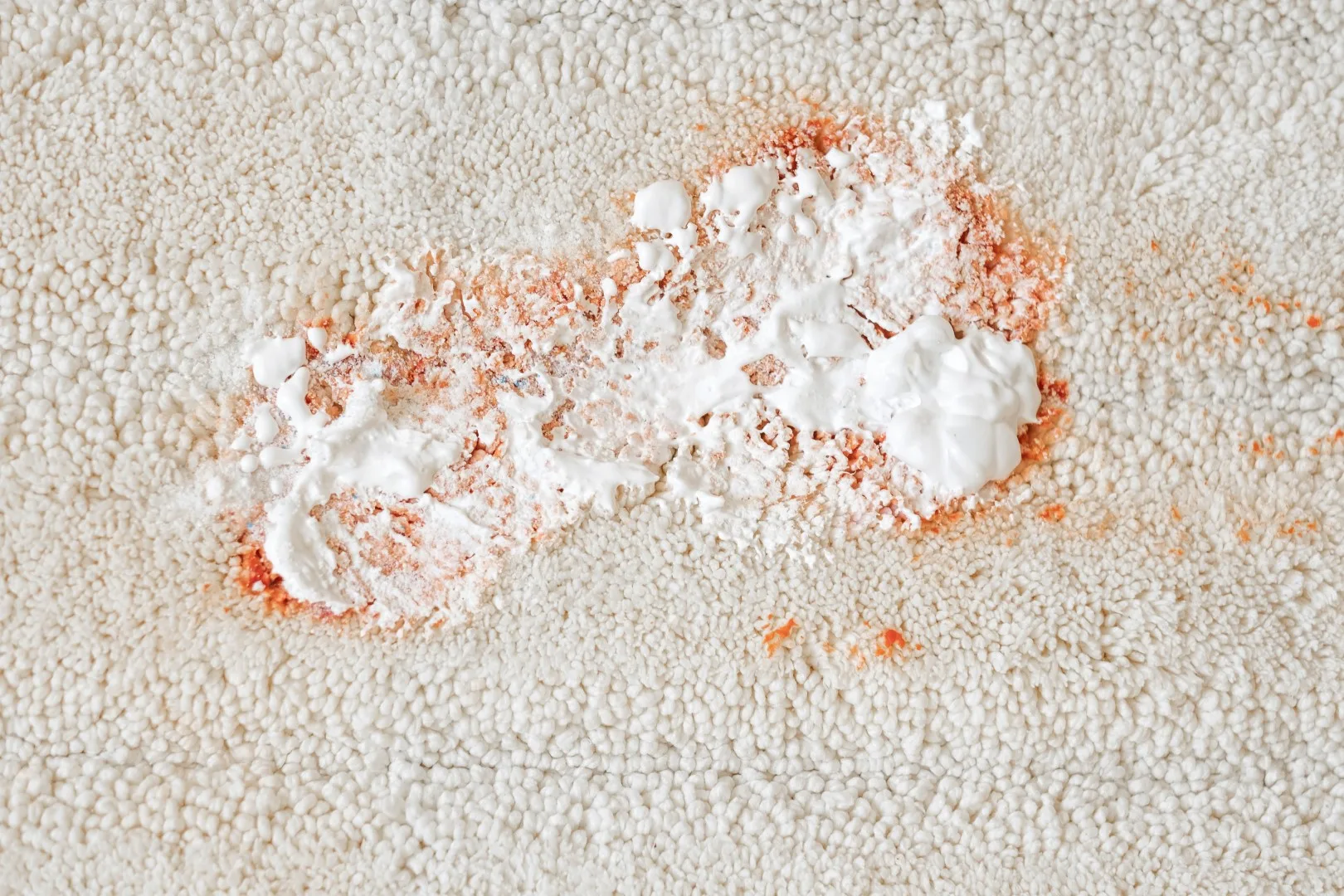
When homeowners come across dark spots, yellowing, fading, or uneven coloring on their carpet, they may automatically assume it’s a stain. While stains are common, not every carpet discoloration is caused by spilled food or drinks, pet accidents, or tracked-in dirt. In some cases, carpet discoloration may result from conditions entirely out of your control.
Today, we’ll discuss the difference between a true stain and other forms of discoloration, so you can fix your carpet and avoid permanent damage.
What’s the Difference Between a Stain and Discoloration?
A stain occurs when a substance, such as a wine or coffee spill or pet accident, penetrates carpet fibers and leaves behind residue or pigment.
Discoloration, however, refers to a change in the carpet’s original color that might not involve any foreign material at all. In these situations, the carpet fibers themselves have been faded, bleached, or damaged.
It’s important to understand this distinction because some discoloration issues cannot be removed with standard carpet cleaning methods.
Common Causes of Carpet Discoloration
Sunlight and UV Exposure
Direct sunlight can slowly fade carpet fibers and break down color pigments, especially in rooms that are overly sunny or have large windows. You may notice lighter patches near windows, sliding glass doors, or uncovered areas where UV rays regularly hit the carpet.
Dark-colored carpets are especially prone to fading and can lead to uneven coloring throughout the room.
Bleach or Chemical Damage
Certain household cleaners contain bleaching agents or harsh chemicals that can permanently alter the color of your carpet. Even a small bleach, disinfectant, acne medication, or household cleaner spill can strip away dye and create light spots or orange discoloration.
Unfortunately, once carpet dye has been removed, cleaning alone can’t restore the original color.
Pet Urine Reactions
When your pet has an accident on your carpet, you may be worried about stains and odors. But urine can also react with carpet dyes, causing yellowing, browning, or permanent color loss. In severe situations, this discoloration may spread throughout the room if moisture reaches the carpet pad or subfloor.
While professional cleaning and odor treatment may help reduce visible damage, some areas may require carpet repair or replacement.
Moisture and Water Damage
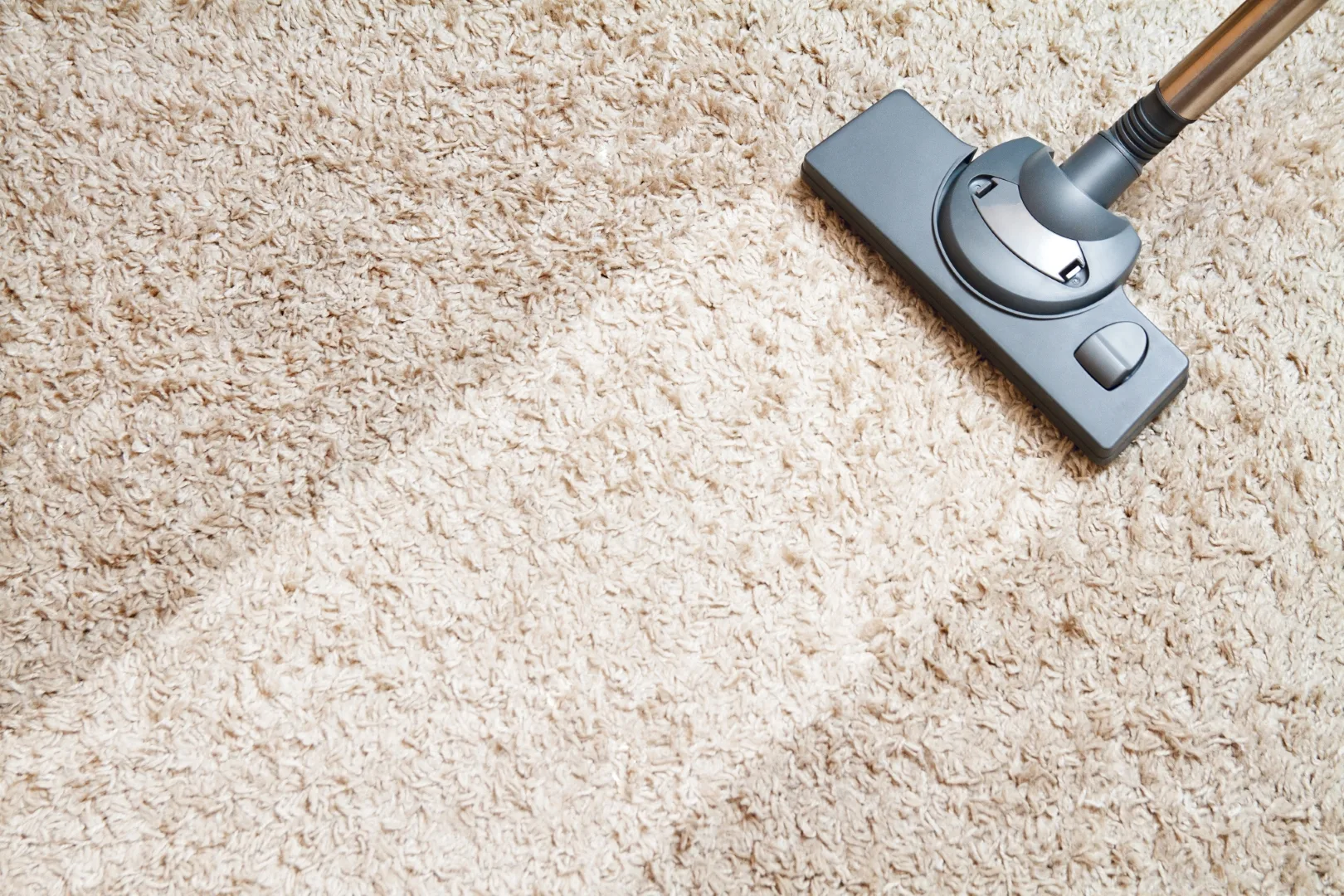
Water intrusion from plumbing leaks, flooding, or high humidity can cause carpet discoloration over time. When moisture gets trapped beneath the carpet, it may develop brown patches, mildew spots, or dark traffic patterns.
In some cases, what you may think is a surface stain may actually be contamination rising from the carpet backing or subfloor.
Traffic Wear and Fiber Damage
Carpet naturally wears down in high-traffic areas. This includes hallways, entryways, and in front of couches and chairs. As the fibers get consistently crushed and damaged, the carpet can appear darker or duller
Even after professional cleaning, worn fibers may continue looking discolored because the texture and reflective properties of the carpet have been changed permanently.
Furniture Stains and Oxidation
Metal furniture legs, wood finishes, or rubber rug padding can sometimes react with carpet fibers. You may notice rust-colored marks, yellow spots, or dark outlines where furniture once sat.
Oxidation from prolonged exposure to air and moisture can also cause unusual discoloration patterns.
Can Carpet Discoloration Be Fixed?
Professional carpet cleaning can often improve issues caused by dirt buildup, residue, mild water damage, or certain organic stains. However, discoloration caused by beaching, UV fading, chemical reactions, or fiber damage may require carpet dye correction, spot repair or patching, carpet stretching, pad replacement, partial carpet replacement, or water damage restoration services.
An experienced carpet cleaning or restoration professional can identify the source of the discoloration and recommend the most effective solution.
Preventing Future Carpet Discoloration
Homeowners can reduce the risk of carpet discoloration by:
- Cleaning spills as soon as possible
- Avoiding harsh chemical cleaners
- Using blinds or curtains to reduce sun exposure
- Investing in regular professional carpet cleaning
- Addressing plumbing leaks (even small ones) immediately
- Placing entry mats in high-traffic areas
- Keeping indoor humidity levels under control
- Ensure your home has proper ventilation
Stain or Discoloration?
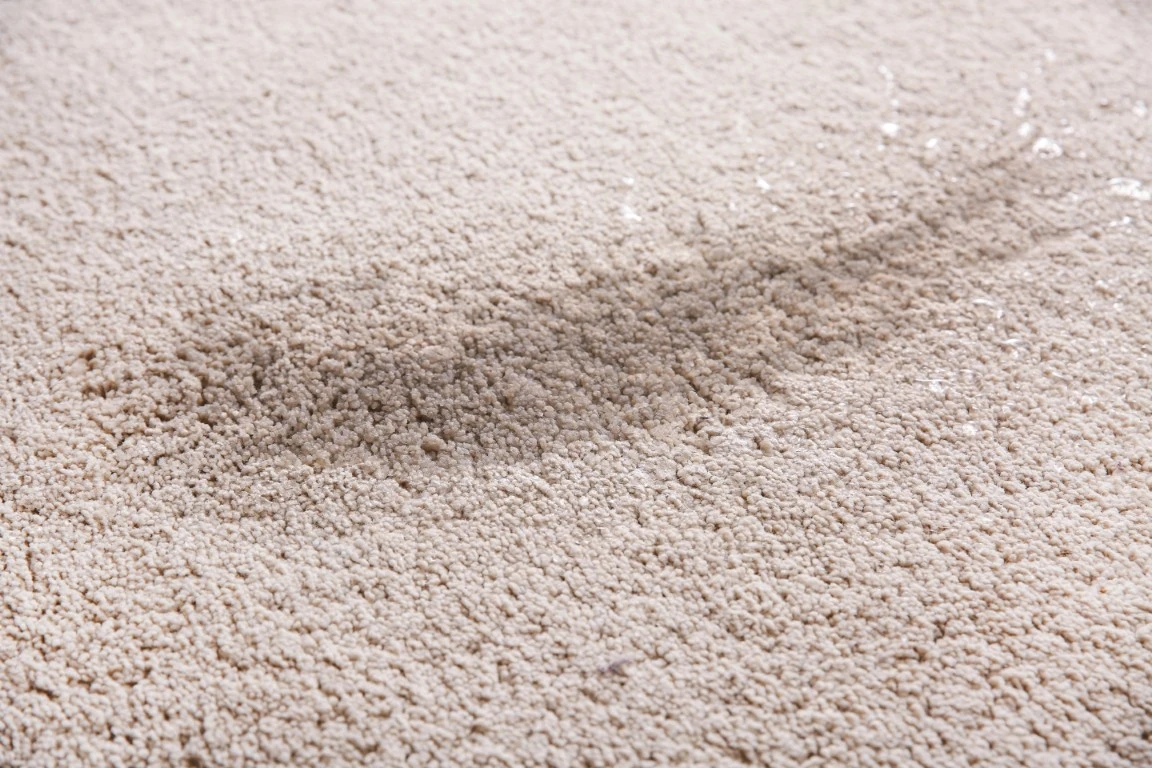
Not every discolored spot on your carpet is a stain that can be easily cleaned away. Fading, moisture damage, chemical reactions, and worn fibers can all change the appearance of your carpet.
If you notice unusual spots, uneven coloring, or recurring dark patches on your carpet, you should identify the root cause as soon as possible. Professional carpet cleaning and restoration services can help determine the issue you have and whether it needs to be cleaned, repaired, or restored to prevent damage from becoming more severe.