
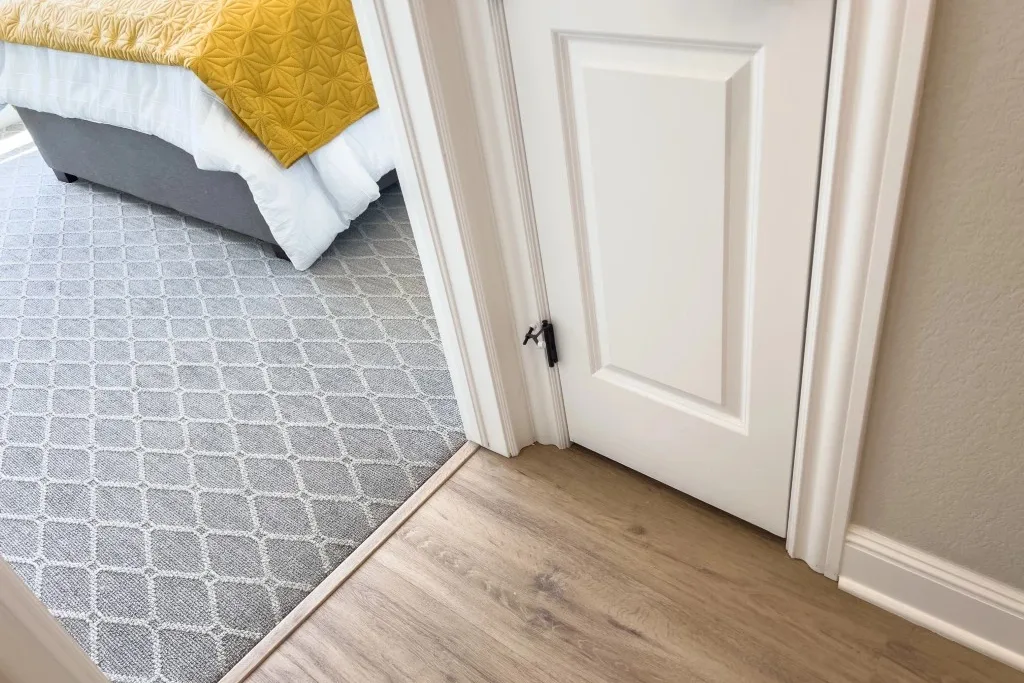
When homeowners invest in new flooring, they often focus on choosing the perfect hardwood, luxury vinyl plank (LVP), laminate, carpet, or tile. They may not consider one small detail that plays an important role in both the appearance and performance of your flooring: transition strips.
Below, we’ll discuss why these small, but crucial components play an important role in giving your home a finished look, as well as protecting your flooring from damage and reducing safety hazards
What Are Transition Strips?
Transition strips are narrow pieces of material installed where two flooring surfaces meet. They create a smooth, intentional transition between rooms or between different flooring materials.
Transition strips are often used between hardwood and tile, vinyl and carpet, laminate and hardwood, tile and vinyl, different flooring heights, and doorways between rooms.
Transition strips are available in wood, aluminum, vinyl, rubber, and composite materials and can often be color-matched to complement your flooring.
Why Transition Strips Matter
While transition strips can improve aesthetics, they also serve several important functional purposes:
They Give Rooms a Finished Appearance
Without transition strips, the edges where flooring materials meet may look unfinished or uneven. Properly selected transition strips give your home a clean, professionally designed appearance.
Instead of exposed flooring edges or messy cuts, you’ll have smooth transitions that tie neighboring rooms together.
They Protect Flooring Edges
The edges of flooring are often the most vulnerable parts of an installation.
Daily foot traffic, moving furniture, rolling office chairs, children and pet movement, and cleaning equipment can cause exposed flooring edges to chip, crack, fray, or lift over time, as well as allow dirt and water to slip under floor panels.
Transition strips help protect these edges from impact and wear, as well as seal seam spaces to keep out grime and moisture, extending the life of your flooring investment.
They Accommodate Expansion and Contraction
Many flooring materials, especially hardwood, engineered hardwood, and laminate, naturally expand and contract due to humidity and temperature changes.
Transition strips help cover the small expansion gaps that many manufacturers require, while still allowing the flooring to move as intended. This prevents buckling, warping, separation, and future damage.
They Improve Safety
Uneven flooring changes can quickly become tripping hazards. Transition strips help bridge differences in floor height, creating smoother walking surfaces and improving overall home safety.
This is particularly important in homes with children, older adults, individuals with mobility challenges, or people using wheelchairs or walkers.
They Help Different Flooring Types Work Together
Many modern homes feature multiple flooring materials. For example, homeowners may have hardwood throughout the living areas, tile in the bathrooms, luxury vinyl in the laundry room, and carpet in the bedrooms.
Transition strips allow these different materials to meet cleanly, even with varying thicknesses or installation methods.
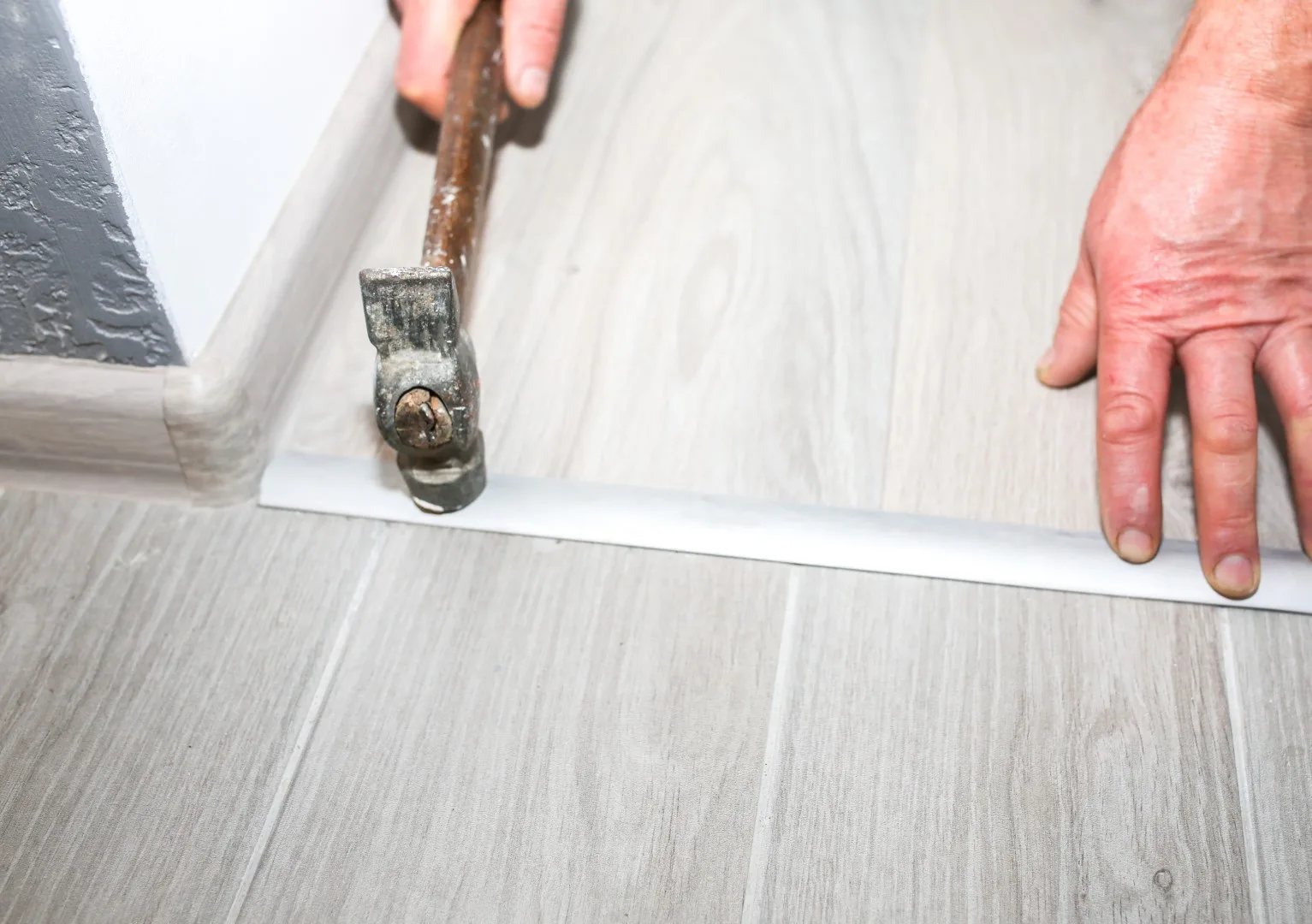
Common Types of Transition Strips
Different situations call for different transition profiles.
T-Molding
T-molding connects two hard-surface floors that are approximately the same height, such as hardwood to hardwood, vinyl plank to laminate, or laminate to engineered wood.
This transition strip fits neatly into the expansion gap between floors without restricting necessary movement.
Reducer Strip
Reducer strips create smooth transitions from higher flooring surfaces to lower ones, like hardwood to vinyl, laminate to concrete, or tile to thinner flooring.
The sloped design creates a gradual change in height.
Threshold (End Cap)
Thresholds finish the edge of flooring where it meets another surface that doesn’t require a transition strip, such as an exterior door, sliding glass door, fireplace hearth, or floor-to-ceiling window.
Carpet Transition
These strips secure carpet edges, creating a smooth transition to hard flooring, preventing carpet edges from fraying, and providing a neat finish.
Choosing the Right Transition Strip
The right transition strip will depend on the flooring combinations in your home, the thickness of the floor materials, flooring colors and finishes, and traffic patterns.
In some installations, you can skip transition strips. But this depends on the manufacturer’s installation guidelines, your home’s square footage, expansion requirements, room layouts, flooring directions, and doorway widths.
A professional installer than determine the right transition strips and where they are necessary for both performance and appearance.
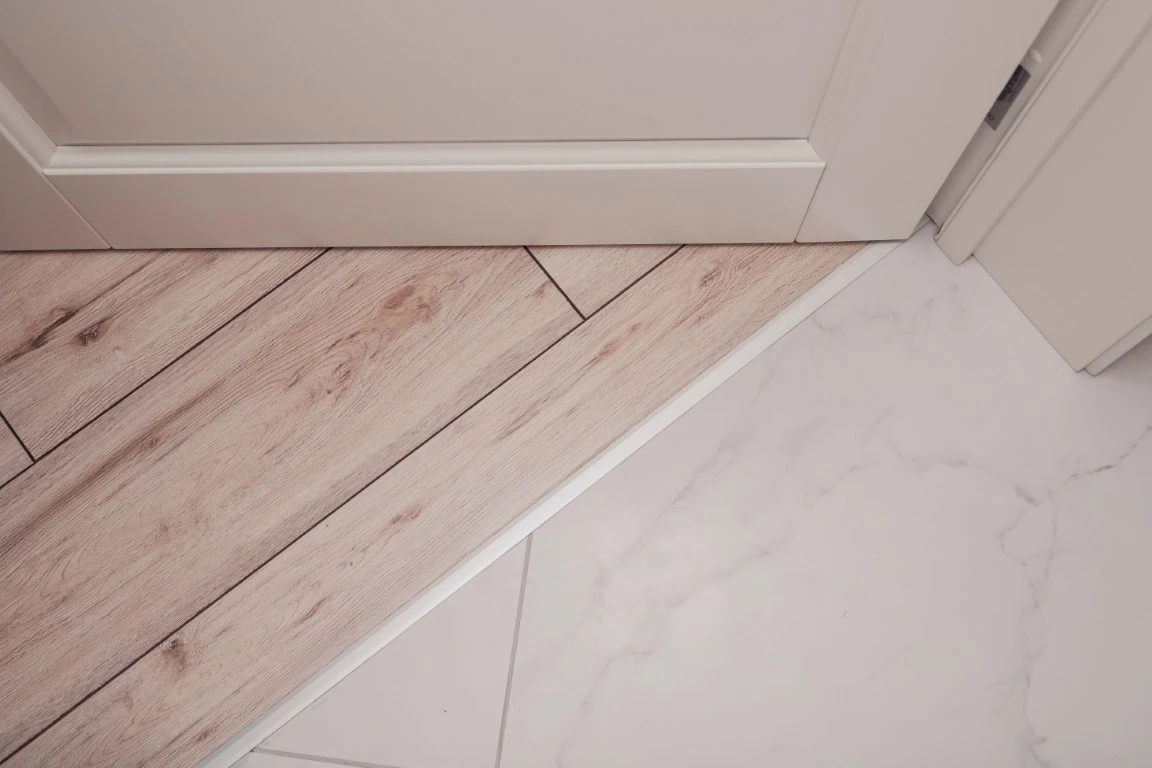
Transition Strips: Improving Safety and Appearance
Transition strips may be a small part of your flooring, but they have a significant impact. From protecting flooring edges and accommodating natural movement to reducing tripped hazards and creating seamless transitions, they can improve durability, safety, and the overall appearance of your flooring for years to come.
If you’re planning new flooring or remodeling your home, don’t overlook this important finishing detail.